
A Cayman Exempted Company or a Cayman LLC can both be candidates for an offshore structure, but neither replaces local business licensing, fund, securities or virtual asset regulation, and neither removes economic substance, beneficial ownership or annual filing duties. Route the analysis through business location, transaction activity and governance first, then have providers explain the entity, scope, ongoing obligations and exclusions in one briefing. That makes decisions comparable.
KEY TAKEAWAYS
Key takeaways
- Establish first whether the business actually happens in Cayman; that is the first gate separating an offshore structure from a local business licensing question.
- An Exempted Company and a Cayman LLC are not synonyms: one addresses the offshore operating boundary under the Companies Act, the other turns on the LLC agreement, members and management arrangements.
- Fund, securities investment and virtual asset facts can trigger separate CIMA registration, registration filing or licensing routes, which ordinary company incorporation cannot replace.
- Annual returns, economic substance notification, beneficial ownership information and handover between service providers must be written into a responsibility calendar before incorporation, not left as an annual review.
- Send the same twelve-item factual briefing before requesting quotes from service providers, so you can compare structural advice instead of only the first line of pricing.
The short answer: judge the business first, then choose the Cayman entity
Whether a Cayman entity suits you cannot be answered with "it is for offshore structuring". For the same founder, holding shares in an offshore subsidiary through a holding layer, letting offshore clients contract with the entity, pooling funds from several investors, or hiring locally in Cayman and serving local clients may all be called "registering a Cayman company", yet each leads into different company law, licensing and ongoing maintenance questions.
The practical starting point is to write down the real business for the next twelve months and then see which entity can carry it. Where the business is mainly offshore and does not need to transact directly in Cayman, an Exempted Company or an LLC can enter the shortlist. That is not a conclusion, and it is not a guarantee on tax, banking, licensing or fundraising. The Cayman Companies Act sets its own boundaries on the declaration an Exempted Company must make, on carrying on business outside the Islands, and on local business licensing, so any description presenting it as suitable for every kind of business deserves a pause and a check.
By the end of this article you should not need to choose an entity immediately, but you should be able to take a more reliable next step: place yourself in one main entry point, offshore business structure, local Cayman operation, fund or investment business, or securities and virtual asset services, and then have the relevant Cayman-qualified corporate, legal, tax or regulatory professional verify it. That avoids paying a registration fee only to discover that the contracting entity, the investor documents, the local licence or the annual records were never arranged.
Step one: rule out the wrong expectations with three questions
The first question is whether the business will genuinely happen in Cayman. Do not look only at where the shareholders live, or where the servers, bank or registered agent sit. List who sells to whom, who signs contracts, who employs people, where clients and assets are, and whether there is a storefront or local operations. The Cayman government's business structure guidance separates an ordinary resident company from the cases where a company may carry on business within the Islands, which is exactly the point: "registered in Cayman" and "operating in Cayman" are not the same statement. See the Cayman government business structure guidance.
The second question is whether the entity exists to hold and govern your own business, or to receive, pool, manage or invest other people's money. If the plan involves raising from outside investors, having investors take no part in day-to-day investment management, issuing redeemable or repurchasable interests, or designing a fund, master-feeder or private fund arrangement, then entity selection stops being a form chosen by a registered agent. CIMA has a separate framework for fund vehicles, registration or licensing and ongoing supervision, and "form a company first and deal with that later" will not carry it. See CIMA's overview of investment funds.
The third question is whether the service actually provided has a securities investment or virtual asset element. Managing securities for others, giving investment advice, arranging transactions, safeguarding virtual assets or running a trading platform depends not on whether the business plan contains the word "financial", but on the actual service, the counterparties, the fee model and where it is delivered. CIMA's securities and VASP guidance both require the registration, filing, licensing or exemption boundary to be tested against the activity first.
- Does the business transact with clients or actually operate within Cayman?
- Does it pool, manage or invest funds for others, or issue interests to investors?
- Does it offer securities dealing, investment management, investment advice, virtual asset exchange, transfer, custody or platform services?
If any of those cannot be confirmed, the most professional next step is not to pick a familiar-sounding entity but to fill in the facts. Registration work can proceed once the material is complete; it cannot replace classification of the activity itself.
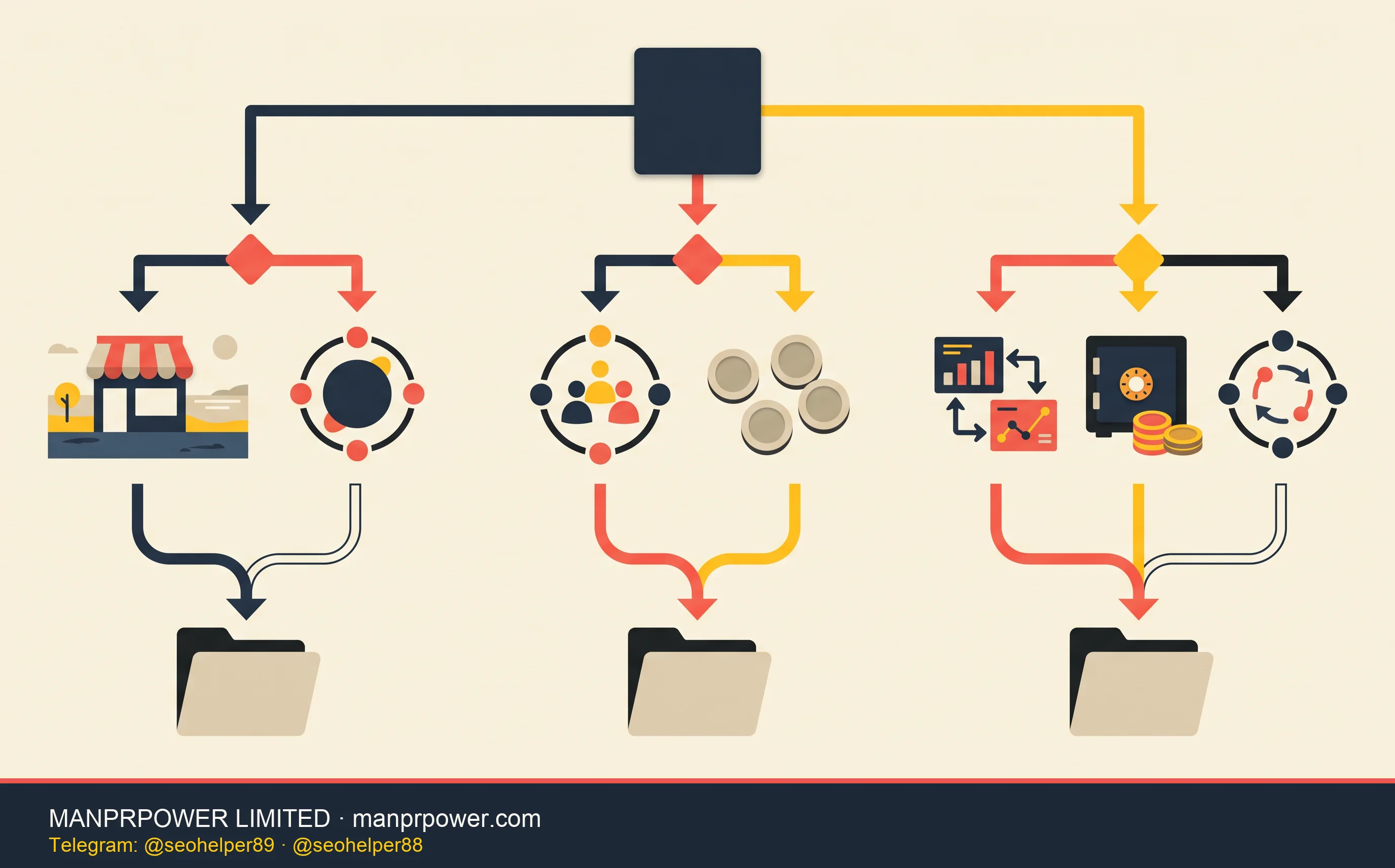
Figure 2|Local operations, pooling funds for others, and securities or virtual asset services each have to be checked before discussing the entity.
Image: compiled from the Cayman government business structure guidance, CIMA's investment fund overview, CIMA securities investment business requirements and the CIMA VASP FAQ; produced by MANPRPOWER LIMITED with Nano Banana 2.
Not every "Cayman company" is an Exempted Company

Figure 3|An Exempted Company, an LLC, a local operation and a fund or regulated activity do not answer the same set of questions.
Image: compiled from the Companies Act, the LLC Act, the Cayman government business structure guidance and public CIMA material; produced by MANPRPOWER LIMITED with Nano Banana 2.
Exempted Company: a starting point for offshore business, not a universal label
The Exempted Company is often treated as a synonym for a Cayman entity, but the legal focus is not the appeal of the name. The current Companies Act requires a company applying to be registered as an Exempted Company to declare that its business is carried on mainly outside the Islands, or that it holds a licence to carry on business within the Islands under an applicable law. It also provides that, except as necessary for its offshore business, an Exempted Company may not trade or carry on business within the Islands with any person unless it holds the applicable local business licence. See the Companies Act (2025 Revision).
In practice that boundary means this: if you want a corporate layer for offshore holding, offshore contracts, group financing or other offshore arrangements, an Exempted Company can be a starting point to assess. But if the business plan already includes local retail in Cayman, food and beverage, property operation, serving local clients or employing a local team, stop reading "exempted" as permission for local trading. Whether the entity can be formed and whether a given business can run locally are two different checklists.
Cayman LLC: read the operating agreement before discussing flexibility
A Cayman LLC is a separate legal entity; it is not an Exempted Company with a different suffix. The Cayman Limited Liability Companies Act allows one or more persons to form an LLC for any lawful business, purpose or activity, requires it to have at least one member at all times, and requires the registered statement to set out the registered address in the Islands, the initial members, the nature of the business and the financial year. The law also requires a statement that it will not carry on business with the public in Cayman except as necessary for its offshore business.
When considering an LLC, then, do not only ask whether it is "more flexible". Decide who holds management authority, how members join or leave, how profits and distributions are agreed, who may sign financing or investment documents for the entity, who keeps the records, and who approves a future conversion or exit, and write those answers back into the LLC agreement and the actual transaction documents. Flexibility is only valuable when the parties can genuinely write, execute and file the rules; otherwise it merely moves future disputes from a registration form into a contract.
Local operating structures: location and ownership boundaries change the question
If you plan to operate locally in Cayman, a general offshore structure note is not enough. The Cayman government's business structure page explains that an ordinary resident company can be used to carry on business within the Islands, and it also notes that an ordinary resident company intending to trade locally that is not at least 60% Caymanian-owned and controlled may need to check the Local Companies (Control) Licence alongside the Trade and Business Licence. That note is a screening entry point, not a blanket conclusion for any business or entity; the actual activity, location, ownership and permits should be confirmed item by item with a local professional. See Choose a Business Structure.
If the business happens in Cayman, entity choice immediately becomes a licensing question
Some teams assume that as long as they do not write "local retail", local activity can be treated as back-office support. The real test is usually finer: who faces the client, who provides the service, whether there is a local premises, who earns the revenue, what the staff actually do, and which trade or industry permits are needed, all of which can affect the structure and licensing analysis. Hiding real operations inside a broad business description does not make them disappear.
The Cayman government's registration guide also makes the point that the registration route depends on the type of company and the place of business, and that the process for an ordinary local company differs from the thinking behind an offshore entity. That page lists name, incorporation application and consent documents as one set of steps for an ordinary local company and notes that it can be handled through a licensed service provider or the Cayman Business Portal. See Register your business.
The easiest thing to overlook here is the order. Where local operation is part of the business model, the business team should first write down the product, the clients, the locations, the people and the contracts, and only then ask which company and which permits go together. Do not buy a "Cayman company package" first and then work to make the real business look like a fit for it. Conversely, where the business genuinely stays offshore, make "offshore" real in the contracts, payments, people and decisions rather than leaving it in marketing copy.
Funds, securities and virtual assets: put the regulatory route before incorporation

Figure 4|Incorporation cannot replace classification and regulatory checks for fund, securities investment business or virtual asset activity.
Image: compiled from the CIMA investment fund regulatory overview, securities investment business requirements and the VASP FAQ; produced by MANPRPOWER LIMITED with Nano Banana 2.
Funds and private arrangements: test the definition before anything else
If the plan pools funds from several investors, has a manager acquire, hold, manage or dispose of investments on a collective basis, and shares returns among investors, do not reduce it to "form a holding company". CIMA's investment fund material notes that a fund may use different vehicles such as a company, trust or partnership, and that a common vehicle is not the same as being unregulated. Whether a mutual fund or a private fund needs registration, a licence, an audit, annual returns or specific service providers depends on the definitions and the particular arrangement. See CIMA's investment fund regulatory overview.
CIMA's mutual fund registration or licensing requirements set out separate material such as the application, the certificate of registration, the consent of the manager and auditor, the offering document and fees; the official private fund FAQ lists the certificate of registration, constitutional documents, offering material, structure chart and application material, and describes the applicable ongoing audit and annual filing requirements. See Investment Funds Licensing Requirements and the Private Funds Law FAQs.
So who the investors are, whether there are redemption rights, whether funds are pooled, who has day-to-day investment discretion, whether fees are charged and how the offering material is worded should all go into analysis by a qualified fund and legal adviser first. A registered agent can assist with corporate information but should not be asked to reach a regulatory conclusion on the strength of "it is just friends investing together".
Securities investment business: exemptions and registrations still have to be checked
CIMA explains that a person carrying on securities investment business must first determine whether a licence is required, and that certain categories may be a Registered Person or fall within excluded activity, but those are not synonyms for skipping the analysis. Applications and registrations also involve material, fees, annual declarations and ongoing requirements. See CIMA Securities Licensing Requirements.
In practice, break the activity into who it is for, what is done, whether compensation is received, whether there is discretion, whether clients are actively solicited, and where it takes place. Proprietary positions within a group, investment advice to clients, discretionary portfolio management and arranging purchases and sales may not share one answer. This article does not decide whether any given activity is securities investment business; its purpose is to move that judgement from after incorporation to before the structure is chosen.
Virtual assets: break out the actual service, do not just write "Web3"
With virtual assets, the most dangerous approach is to describe the business only as a "blockchain project" or "technology development". The CIMA VASP FAQ lists virtual asset services as including issuance, exchange between fiat or virtual assets, transfer, custody, and financial services related to issuing or selling. The FAQ explains that entities providing the relevant services in or from Cayman fall within the VASP framework, and that entities providing virtual asset custody or trading platform services must apply for a VASP licence under the current arrangements. Other business lines may trigger another regulatory law at the same time. See the CIMA VASP FAQ.
That does not mean every software company, token project or entity holding tokens necessarily needs the same licence. It shows why wallet control, asset safekeeping, order matching, exchange, platform operation, who is charged, and which entity delivers the service have to be written out item by item. Only then can legal and regulatory advisers give a classification opinion that can be verified.
Tax, economic substance and beneficial ownership: do not reason backwards from marketing phrases
Economic substance: identify the relevant activity instead of assuming everything needs "substance"
Many structure discussions misdescribe economic substance as "rent an address", or assume in the other direction that every Cayman entity faces the same entity test. Neither is reliable. The DITC maintains the current economic substance legislation, regulations, guidance and reporting resources; its Guidance Notes require each entity to state through an annual Economic Substance Notification whether it carries on a relevant activity, its relevant entity status and other necessary information, and connect the notification to the annual reporting process. See the DITC current resources and the Economic Substance Guidance Notes v3.2.
The right order is to establish what the entity actually does, where its income and core activities are, who makes decisions, and what staffing and outsourcing arrangements exist, and then have a Cayman tax or legal professional judge the specific applicability. Do not use "nobody is employed locally" to prove that no check is needed, and do not pile unrelated costs onto a company or file a wrong description simply because you have heard the term economic substance.
Beneficial ownership information: treat updating as an ongoing duty
The Beneficial Ownership Transparency Act consolidated in 2026 establishes the statutory framework for the beneficial ownership register and brings the corporate services provider that supplies a registered address within the relevant definitions. The Act also sets out ongoing mechanisms for changes in information, registration and the provision of information. For a founder the important thing is not memorising a percentage but keeping a verifiable ownership chain, control, directors or managers, contacts and change decisions from the outset. See the Beneficial Ownership Transparency Act (2026 Revision).
Where shareholders hold interests through several layers of companies, trusts, funds or contractual arrangements, the information task becomes far more complex than a shareholder list. Have the party providing the registered address or corporate services state clearly what they check, who provides updates, how a change is handed over once triggered, and which conclusions a legal adviser must confirm. Privacy, public visibility and information exchange should not rest on out-of-date marketing language.
Ongoing maintenance is not an "annual review package" but a responsibility calendar

Figure 5|Annual returns, economic substance, beneficial ownership, corporate records and service handover are separate lines of responsibility, and a change in information triggers an update.
Image: compiled from the Companies Act, the Beneficial Ownership Transparency Act and the DITC economic substance resources; produced by MANPRPOWER LIMITED with Nano Banana 2.
An Exempted Company does not stop at the certificate of incorporation. The current Companies Act requires an Exempted Company that meets the relevant conditions to file an annual return with the Registrar and pay an annual fee every January after its registration; late filing attracts staged penalties, and continued non-compliance can lead into the defunct company process. See the Companies Act (2025 Revision).
The phrase "annual review" tends to hide several different lines of responsibility: the annual return and annual fee under company law, the economic substance notification, beneficial ownership information, books and internal resolutions, CIMA filings for regulated business, and the renewal and information verification of the service providers. They are not necessarily completed by the same firm and do not all fall due on the same day. For fund, securities or VASP entities in particular, the ordinary company annual items are not a complete regulatory calendar.
Before deciding to incorporate, name at least one internal owner who keeps the following: the latest ownership and control chart, the list of directors or managers, changes in contracts and business activity, the financial year, the service provider contacts, and the current status and change record of each filing. If that person leaves, or the group restructures, closes funding, transfers shares or changes the scope of business, write down who notifies whom, when, and who keeps the evidence. The service provider then acts as a collaborator and reviewer rather than a substitute for management's factual responsibility.
A service provider's quote has to answer five things
Rather than asking only about the first-year price, have each service provider answer five questions from the same business briefing. First, which entity is recommended, and why not the nearby Exempted Company, LLC, local operation or fund route. Second, which registration, registered address, corporate services, document preparation and handover work the quote includes, and what it explicitly excludes. Third, whether the place of business or regulated activity needs separate confirmation by a particular class of Cayman-qualified person.
Fourth, which statutory, regulatory, information-maintenance and service-renewal items follow in later years, who initiates them, who bears responsibility for the accuracy of the information, and how fees are calculated. Fifth, whether the scope still covers the engagement if shareholders, management, business scope or fund activity change, or whether it needs a fresh assessment. The Cayman government's registration guide itself notes that the registration route varies with entity type and place of business and can be handled through a licensed service provider or the official portal; it does not call any commercial package a universal answer. See Register your business.
If a quote only promises a fast certificate and will not set out the business classification, the ongoing information duties, the regulatory referrals or the exclusions, it can at best answer the incorporation step. It cannot answer whether your structure suits long-term use. For teams with investors, financial services or cross-border transactions, the second question usually matters more.
Prepare these twelve facts before comparing structures and services

Figure 6|Put business, locations, contracts, control, investors, activity, documents, changes and annual responsibilities into one briefing so that structures and services can be compared.
Image: compiled from the Companies Act, the LLC Act, the Beneficial Ownership Transparency Act, the Cayman government business structure guidance and public CIMA material; produced by MANPRPOWER LIMITED with Nano Banana 2.
Before sending an enquiry to a registered agent, lawyer, tax adviser or regulatory consultant, write these facts on a single page. The more specific the material, the less each provider has to assume a business model of its own.
- The products, services and revenue sources for the next twelve months, avoiding broad industry labels.
- The country or region of clients, suppliers, employees, offices, warehousing, servers and the people actually delivering the service.
- Who signs client contracts, who invoices, who receives funds, and who bears refunds, compensation and day-to-day liabilities.
- Which companies, trusts, partnerships or individuals in the existing group will hold shares, control or fund the entity.
- The expected shareholders, members, directors, managers and authorised signatories, and who holds veto rights or de facto control.
- Whether funds will be raised from outside investors, interests issued, redemptions accepted, funds pooled or management fees charged.
- Whether any securities dealing, investment advice, asset management, brokering, virtual asset exchange, custody, transfer or platform function is provided.
- Whether the business will serve clients locally in Cayman, operate there, or need local premises, staff and permits.
- Who drafts and keeps the contracts, constitutional documents, LLC agreement, investor material, resolutions and financial year.
- Who can confirm the facts internally after a change in shareholding, control or business, and instruct the registered address or corporate services provider.
- Which tax residence, regulatory registrations, bank or audit arrangements already exist, and which are still only planned.
- Who owns the master calendar for annual returns, ESN, beneficial ownership information, books, regulatory filings and service provider renewals.
This briefing does not replace legal advice, but it lifts the question from "set up a Cayman company for me" to "explain the viable route and the ongoing boundaries on verifiable facts". Only then can the answers be compared with each other.
Finally: suitable does not mean immediately applicable
A Cayman entity can serve genuine cross-border structuring needs, but the condition for it being suitable is never the certificate itself. For offshore business, compare first whether an Exempted Company or an LLC fits the contracts, the governance and the ability to keep records. For local Cayman operations, bring location, ownership and licensing into the analysis first. For funds, securities and virtual assets, confirm the CIMA route first. For every entity, arrange the annual, economic substance and beneficial ownership responsibilities first.
MANPRPOWER LIMITED can help organise the business facts, build the document checklist and coordinate qualified partner institutions. Conclusions on company law, tax, funds, securities, virtual assets, banking and local licensing still have to be reviewed by Cayman-qualified professionals against the actual business. That order promises no particular outcome, but it means that before you pay a registration fee you already know which question actually has to be answered.
SOURCES
Sources
- Cayman Islands Government: Companies Act (2025 Revision)
- Cayman Islands Government: Limited Liability Companies Act (2025 Revision)
- Cayman Islands Government: Beneficial Ownership Transparency Act (2026 Revision)
- DITC: Economic Substance Legislation & Resources
- DITC: Economic Substance Guidance Notes v3.2
- Cayman Islands Centre for Business Development: Choose a Business Structure
- Cayman Islands Centre for Business Development: Register your business
- CIMA: Securities Licensing Requirements
- CIMA: VASP FAQ
- CIMA: Investment Funds Licensing Requirements
- CIMA: Private Funds Law 2020 FAQs
- CIMA: Investment Funds in the Regulated Sector