Approximately five business days is only a reference for the accompanying company registration. It does not include FINTRAC MSB registration and does not represent a unified provincial or federal processing timeframe. The specific start date and submission route are confirmed before work begins. View processing time and steps ↓
Materials preparation
Registration coordination
Progress follow-up
File delivery
02 / DOCUMENT CHECKLIST
What materials are needed for registration.
The following are preliminary materials for the supporting company plan. Confirm the registration location and entity, then complete the formal filing checklist.
01 / DOCUMENT
Three alternative names
Prepare three company names ending in Limited or LTD.
Confirm the entity and filing route02 / DOCUMENT
Director identity documents
Provide photos of the front and back of the director's ID card, or a passport.
Confirm the entity and filing route03 / DOCUMENT
Confirm incorporation plan
Confirm the province, entity type and whether supporting MSB services are included. The remaining materials list is set out after the scope is determined.
Confirm the entity and filing route
The preliminary information above relates to the accompanying company options and does not replace complete registration checklists for every Canadian province. Materials for MSB registration and bank-account opening are confirmed separately; this page does not collect or store identity documents.
03 / BEFORE YOU START
Before submitting, Explain the basic situation clearly.
Explain the business purpose, the applicant and the operating arrangements, then confirm the required materials and service scope.
The following are preliminary materials for the supporting company plan. Confirm the registration location and entity, then complete the formal filing checklist.
04 Notes before submission
Federal formation generally still requires registration in the province or territory where business is actually conducted.
04 / PROCESS & TIMELINE
After materials are confirmed, Arrange the handling step by step.
About 5
working days (with the company package)
A company-registration plan accompanying Canadian MSB services is referenced at approximately five business days. For other provincial or standalone company-registration plans, the entity and service scope must first be confirmed before timing is stated.
01
Choose federal or provincial registration
Compare based on operating provinces, name protection, director arrangements and maintenance costs.
02
Confirm the name or numbered company
Choose a word name and complete the applicable search, or use a numbered company.
03
Prepare the Articles of Incorporation
State the share structure, number of directors and necessary business restrictions.
04
Submit the address, directors, and ISC information
Register the Registered Office, first directors, and persons with significant control.
05
Connect foreign registration and tax accounts
Complete additional registrations for operating locations and open BN, tax and licensing accounts.
The completeness of materials, name confirmation, identity checks, and follow-up requests affect timing; electronic documents and paper-document delivery are arranged separately. About five working days is only a reference for the associated company-incorporation service. It excludes FINTRAC MSB registration and does not represent a uniform provincial or federal processing time. Confirm the specific start point and filing route before proceeding. View delivery files ↓
REGISTRATION DOCUMENTS / Delivered after completion
What will you receive after incorporation.
Delivered documents are listed item by item when the incorporation plan is confirmed.
Confirm the plan, then list the deliverables clearly.
Before proceeding, we state the names of deliverable documents, whether electronic or paper versions are included, and whether seals or postage are included. The confirmed service list governs.
General ownership rules and director-residency requirements are separate issues. Federal corporations must specifically check the required proportion of resident directors, and restricted sectors may have additional requirements.
Does one working day include a tax ID, bank account, and licences?+
No. That timeframe mainly refers to the service target for a basic federal incorporation application.
Do federal director-residency rules apply to companies in every province?+
This generalisation does not apply. Director requirements differ between the federal CBCA and each province/territory and must be confirmed for the selected jurisdiction.
When does the estimated time written on the page start to be calculated?+
Approximately five business days is only a reference for the accompanying company registration. It does not include FINTRAC MSB registration and does not represent a unified provincial or federal processing timeframe. The specific start date and submission route are confirmed before work begins.
Service-processing reference: A company-registration plan accompanying Canadian MSB services is referenced at approximately five business days. For other provincial or standalone company-registration plans, the entity and service scope must first be confirmed before timing is stated.
Factors that may affect timing: Progress is affected by material completeness, name confirmation, identity verification, and supplemental documents. Electronic documents and mailed paper documents are arranged separately.
Timing guidance: Approximately five business days is only a reference for the accompanying company registration. It does not include FINTRAC MSB registration and does not represent a unified provincial or federal processing timeframe. The specific start date and submission route are confirmed before work begins.
02
Entity, address, and operations
5 questionsDo I need to register provincial companies after federal registration?+
Extra-provincial or Extra-territorial Registration is usually still required in a province or territory where business is carried on.
Can a federal company name automatically be used in every province?+
Federal incorporation provides its statutory name route, but operating provinces may still have their own name, registration or licensing requirements. Check each location separately.
What are the differences between common subjects, and how should they be selected?+
Ordinary commercial clients may consider a corporation, sole proprietorship, partnership, or cooperative; non-profit corporations fall under a separate regime. Federal and provincial rules on director residency, names, and annual returns differ. The final choice should be reviewed by Canadian legal and tax professionals according to where the business operates.
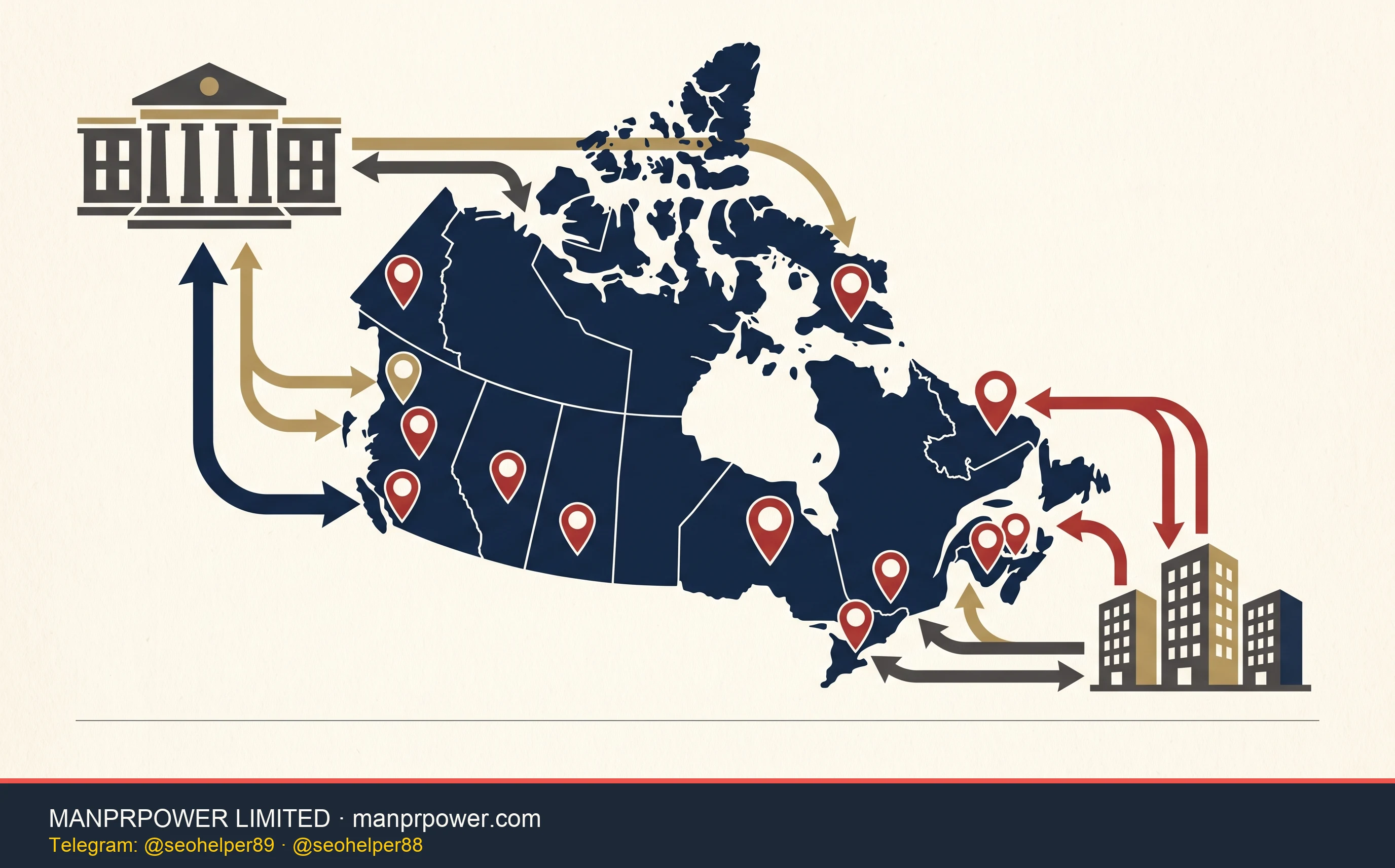
Federal Corporation: Formed under the federal CBCA, a company may use an approved name across Canada, but it may still need extra-provincial registration where applicable. Suitable for businesses operating across provinces or seeking nationwide name protection. Incorporate through Corporations Canada under the CBCA; additional registration in operating provinces is still handled separately.
Provincial Corporation: Incorporated in a specified province or territory, with director and maintenance rules governed by local law. Suitable for businesses concentrated in one province. Under the law of the selected province or territory, directors, names, forms and annual returns cannot be treated as federal requirements.
Partnership: This structure is used by two or more operators carrying on business together; liability, tax and name registration differ from those of a corporation. A comparison route for joint operations requires a separate partnership arrangement. It is not a corporation; partner management, liability, contributions and tax relationship should be centred on that partnership arrangement.
Sole Proprietorship: Operated directly by an individual rather than through a corporation separate from that individual, with business liability generally borne by the individual. A comparison path for small individual businesses: it is not a separate corporation, and the separation between business liability and the individual is limited, so personal liability must first be understood.
What must be considered together with the registration route and local arrangements?+
Formation level, actual operating provinces, name protection, and subsequent extra-provincial registration need to be assessed together; federal formation does not complete every provincial procedure.
Federal Corporation · federal CBCA route: Suitable for projects that need federal name protection or interprovincial planning, though registration in the actual operating jurisdiction still has to be handled after formation. Articles and first directors: prepare the name or numbered name, Articles, registered office, director and ISC information. Federal Annual Return: file the Annual Return and ISC information within 60 days after the anniversary date.
Provincial Corporation · provincial/territorial jurisdiction route: Where business is concentrated in one province or territory, local incorporation can be considered; director rules, names, annual returns and fees must be checked for each location. Target province/territory: describe the actual operating location, name requirements, shareholder and director arrangements. Local ongoing filings: maintain registration, annual returns and company records under the selected jurisdiction's rules.
Extra-provincial Registration · additional registration in the operating location: Federal or provincial incorporation does not remove registration requirements in other provinces where the business actually operates. Operating-location list: identify the provinces or territories for offices, staff, contracts and ongoing business. Multi-jurisdiction maintenance: track updates and annual returns separately in every registration jurisdiction.
Directors · Eligibility and appointment: Federal CBCA director-eligibility and appointment requirements cannot automatically be applied to provincial companies. Director information: confirm eligibility, residency requirements, address and consent to act. Update director changes under the relevant federal-company rules.
What arrangements are worth knowing in advance before the company is put into use?+
A federal corporation may provide company-name protection at the national level, but extra registration may still be needed in provinces where it actually operates. Provincial corporations are formed and maintained under local rules.
Federal and provincial routes can be compared: Interprovincial plans, the scope of name use and the actual operating location affect the appropriate level of formation.
Identify foreign registration in advance: Federal corporations usually still need extra-provincial registration in the province or territory where they actually conduct business.
Articles and governance can be designed: The name or numbered company, share classes, directors, and registered office must be clear before filing.
Check directors and ISCs separately: Federal director rules and Individuals with Significant Control information cannot automatically be applied to every provincial corporation.
Keep annual returns and tax filing separate: The federal Annual Return, ISC updates, and CRA T2 corporate income-tax filing are separate obligations.
03
Documents, process, and services
2 questionsWhat does MANPRPOWER LIMITED do in the project?+
MANPRPOWER LIMITED provides Canadian company-formation requirement mapping, document preparation, and partner coordination. Legal, tax, licensing, and other professional judgments are handled or reviewed by qualified professionals.
Registration route: Compare federal incorporation with incorporation in the target province or territory, and identify any extra-provincial registration needed where the business actually operates.
Formation documents: Prepare the name, Articles, registered office and formation-application materials for the selected route.
Personnel information: Check directors, shareholders, ISC, and applicable federal or provincial eligibility requirements.
Local arrangements: List the provinces where offices, employees, contracts and ongoing operations are located, and confirm the scope of additional registrations.
Submission and follow-up: Coordinate federal or selected provincial/territorial filing, supplementary materials and follow-up on incorporation documents.
Delivery and follow-up items: Distinguish the continuing calendar for Annual Return, ISC, T2 tax and provincial registrations.
What incorporation documents must be added for different entity types?+
The preliminary information above relates to the accompanying company options and does not replace complete registration checklists for every Canadian province. Materials for MSB registration and bank-account opening are confirmed separately; this page does not collect or store identity documents.
Federal Corporation: Name or numbered name, Articles, registered office, first directors and ISC information.
Provincial Corporation: Name, incorporation documents, registered address, director and ownership information required by the target province or territory.
Partnership: Partner identity, business name, operating location, contributions, authority, and applicable registration information.
Sole Proprietorship: Operator identity, business name, operating address, activities, and applicable provincial/territorial registration information.
04
Post-formation maintenance and reference
6 questionsIs annual declaration equal to tax filing?+
No. A Corporations Canada Annual Return and the CRA T2 Corporation Income Tax Return are separate obligations.
After company formation, is a bank or payment account guaranteed to be approved?+
No guarantee. Banks and payment institutions independently review identity, beneficial ownership, business, source of funds and risk.
Is a certificate of incorporation the same as a sector business licence?+
No. Financial, payment, investment, import/export, employment, and other regulated activities still require separate assessment of permits and registrations based on the actual business.
How should ongoing maintenance and a filing calendar be arranged after incorporation?+
After incorporation, registration information, company records, annual filings and tax should be arranged separately. The following list reflects matters that need continuing follow-up under the current service materials.
Ongoing · Company records and business registration: Maintain the registered office, directors, ISC, and registration in the actual operating province/territory. Federal and provincial records are maintained separately.
Anniversary date + 60 days · federal Annual Return and ISC: A CBCA business corporation files within 60 days after its anniversary date. This applies only to the federal route; provincial deadlines must be checked separately.
Fiscal year · T2 corporate income tax: CRA T2 filing and a corporate-registry Annual Return are separate filings. Tax periods and payment arrangements should be confirmed by Canadian tax professionals.
Event trigger · out-of-province registration and information changes: Recheck registration when expanding into a new province or when ISC, director or address information changes. Do not treat a federal certificate as completion of all nationwide formalities.
What other easily overlooked obligations or restrictions are there?+
Check the following items one by one against the company's actual business and operating location.
Registration is still needed in the operating province: Federal formation generally still requires registration in the province or territory where business is actually conducted.
Director residency requirements: Federal CBCA companies generally must satisfy a Canadian-resident director ratio; some provinces differ.
ISC information: A company must identify and update its Individuals with Significant Control.
Annual filing: Federal corporations generally file their Annual Return and ISC information within 60 days after their incorporation anniversary.
An Annual Return is not a tax return: A company-registration annual return and CRA T2 corporate-income-tax return must be handled separately.
Accounts and licences are reviewed separately: Formation does not automatically complete banking, tax or sector licensing.
Where can I find official information on registration and subsequent maintenance?+
The following are official reference entry points for the registration routes and ongoing obligations on this page. Before proceeding, check applicable requirements based on the selected entity, jurisdiction, and actual activities.
Send us the business situation, Confirm the suitable way to proceed.
MANPRPOWER LIMITED provides needs assessment, document preparation and partner coordination. Corporate, legal, tax, licensing and other professional matters are provided, handled or reviewed by qualified professionals.
 Manprpower

 Canada company registration CANADA COMPANY REGISTRATION
 01 / BUSINESS GUIDE
 02 / BUSINESS GUIDE
 03 / BUSINESS GUIDE